Hearing your child struggle to form words can be emotional and confusing. You may notice that your child understands conversations but cannot clearly express thoughts. In many cases, this difficulty may be linked to Childhood Apraxia of Speech, a motor speech disorder that affects how the brain coordinates the movements required for speech. With early identification and specialized therapy, children can strengthen their communication skills and gain confidence in their voice.
What Is Childhood Apraxia of Speech?
Childhood Apraxia of Speech (CAS) is a neurological condition that impacts motor planning for speech. It does not result from weak muscles. Instead, the brain has difficulty organizing and sequencing the precise movements needed to produce sounds and words correctly.
Children with CAS may show inconsistent speech patterns. A word spoken clearly one moment may sound different the next. Longer words often present greater challenges. Speech may appear slow, effortful, or broken into segments. Because CAS affects coordination, therapy must focus on improving movement planning rather than simply correcting pronunciation.
Understanding how Childhood Apraxia of Speech works helps parents choose the right support for their child.
Early Signs to Watch For
Recognizing early signs can lead to quicker intervention and better outcomes. Infants and toddlers with Childhood Apraxia of Speech may babble less than expected. As they grow, they may struggle to imitate sounds or combine syllables into words.
Inconsistent sound errors are common. Some children may omit sounds, reverse syllables, or pause frequently while trying to speak. Frustration often accompanies these challenges because the child knows what they want to say but cannot consistently produce it.
If you notice these patterns, a comprehensive speech-language evaluation is an important next step.
The Importance of Early and Specialized Therapy
Early therapy supports stronger long-term outcomes. The brain’s ability to adapt is greatest during early childhood, making it an ideal time to strengthen motor pathways responsible for speech planning.
Therapy for Childhood Apraxia of Speech is structured and repetitive. Children practice specific word patterns multiple times in each session. Visual cues, hand gestures, and tactile prompts may be used to guide accurate production. Frequent repetition strengthens coordination and improves consistency over time.
Parents searching for Pediatric Speech Therapy Near Me ,” should seek providers with experience in motor speech disorders. An individualized treatment plan ensures therapy targets your child’s unique communication needs.
Family-Centered Support Makes a Difference
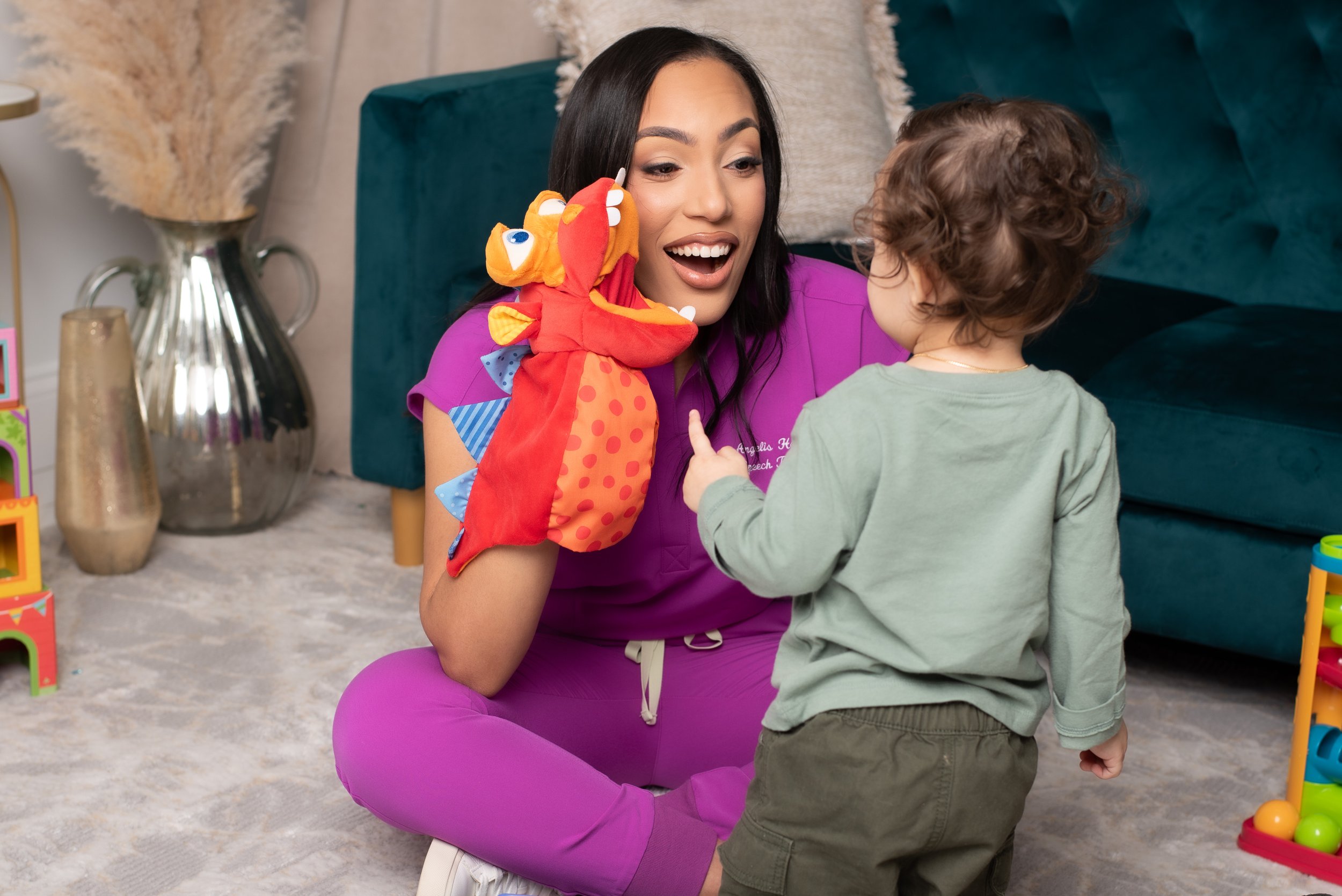
Family involvement is essential for progress. Children benefit from practicing speech goals during daily routines, not only in therapy sessions. Parents are taught how to model target words, provide gentle prompts, and celebrate effort.
Short, frequent practice moments during playtime, meals, or story time help reinforce learning. When families feel supported and informed, therapy becomes a collaborative process that empowers both parent and child.
Family-centered care also reduces pressure. Instead of focusing only on perfect pronunciation, therapy emphasizes steady progress and positive communication experiences.
A Neurodiversity-Affirming, Child-Led Approach
Every child communicates in their own way. A neurodiversity-affirming approach respects these differences and supports growth without trying to change who the child is. Therapy should build skills while honoring individuality.
Child-led sessions increase motivation and engagement. When children participate in activities they enjoy, they are more willing to practice speech targets. This supportive environment strengthens trust and encourages consistent effort.
In-home services can further enhance comfort. Practicing speech skills in familiar settings allows children to apply new patterns in meaningful, everyday situations.
Addressing Broader Communication Needs
Children with Childhood Apraxia of Speech may also experience articulation disorders, early language delays, literacy challenges, stuttering, or differences in language processing. A comprehensive therapy program addresses the full communication profile.
In some cases, Augmentative and Alternative Communication systems are introduced. AAC tools support expression while speech skills continue developing. These tools reduce frustration and increase participation in school and social settings. Using AAC does not prevent speech development; instead, it enhances communication confidence.
Building Progress Over Time
Progress with Childhood Apraxia of Speech requires patience and consistency. Initial gains may appear small, such as improved accuracy of specific sounds or more consistent word production. Over time, these improvements build into clearer overall speech.
Celebrating small successes reinforces effort and builds confidence. Each step forward represents strengthened motor planning and greater communication independence.
Parents should remember that every child’s timeline is unique. Comparing progress to others may create unnecessary stress. Focus instead on steady growth and the positive impact of supportive therapy.
Taking the First Step
If you suspect Childhood Apraxia of Speech, begin with a detailed speech-language evaluation. A thorough assessment examines speech sound production, motor planning, language skills, and communication strengths.
Following the evaluation, a personalized therapy plan is developed. The frequency of sessions depends on your child’s needs and goals. Consistent collaboration between therapist and family ensures progress remains steady and meaningful.
Early action provides children with the best opportunity to develop clear and confident communication skills.
Conclusion
Childhood Apraxia of Speech can feel overwhelming, but with early intervention, family-centered care, and individualized therapy, children can achieve meaningful improvements. A neurodiversity-affirming and child-led approach builds not only clearer speech but also lasting confidence. With the right support, your child can find their voice and communicate with greater ease.
Frequently Asked Questions
1. Can Childhood Apraxia of Speech be outgrown?
CAS typically requires structured therapy. While children can make significant progress, professional support is usually necessary for lasting improvement.
2. How often should therapy sessions occur?
Many children benefit from frequent sessions, especially early in treatment. The schedule depends on severity and individual needs.
3. Does using AAC delay speech development?
No. AAC supports communication and often reduces frustration, allowing children to participate more fully while verbal speech skills continue to grow.